Opening

Every story begins differently.
Not everyone who comes to Dr. Aidlin looks the same.
Each person has a different life. A different story. A different experience.
And different reasons for finally beginning to look for help.
But very often, behind these very different stories, there is a similar internal feeling.
Years of struggle. Constant attempts to fix something.
Diets.
Restrictions.
Medications.
Hope that appears at first — and then slowly disappears again.
And over time — fatigue.
Not only physical fatigue. Internal fatigue.
Many people gradually begin to feel that the problem stopped being only about weight a long time ago.
THAT IT IS NOT ONLY ABOUT
what they are "supposed to do."
But about something that keeps pulling them back into the same internal state again and again:
The stories on this page are not about perfect people. And not about "dramatic transformations."
They are stories of people who gradually began recovering:
that many of them had almost stopped believing was still possible.
The Man Who Succeeded at Everything — Except This

When he first came to Dr. Aidlin, he was 56 years old.
He was the kind of person others naturally saw as successful. Highly intelligent. Highly educated.
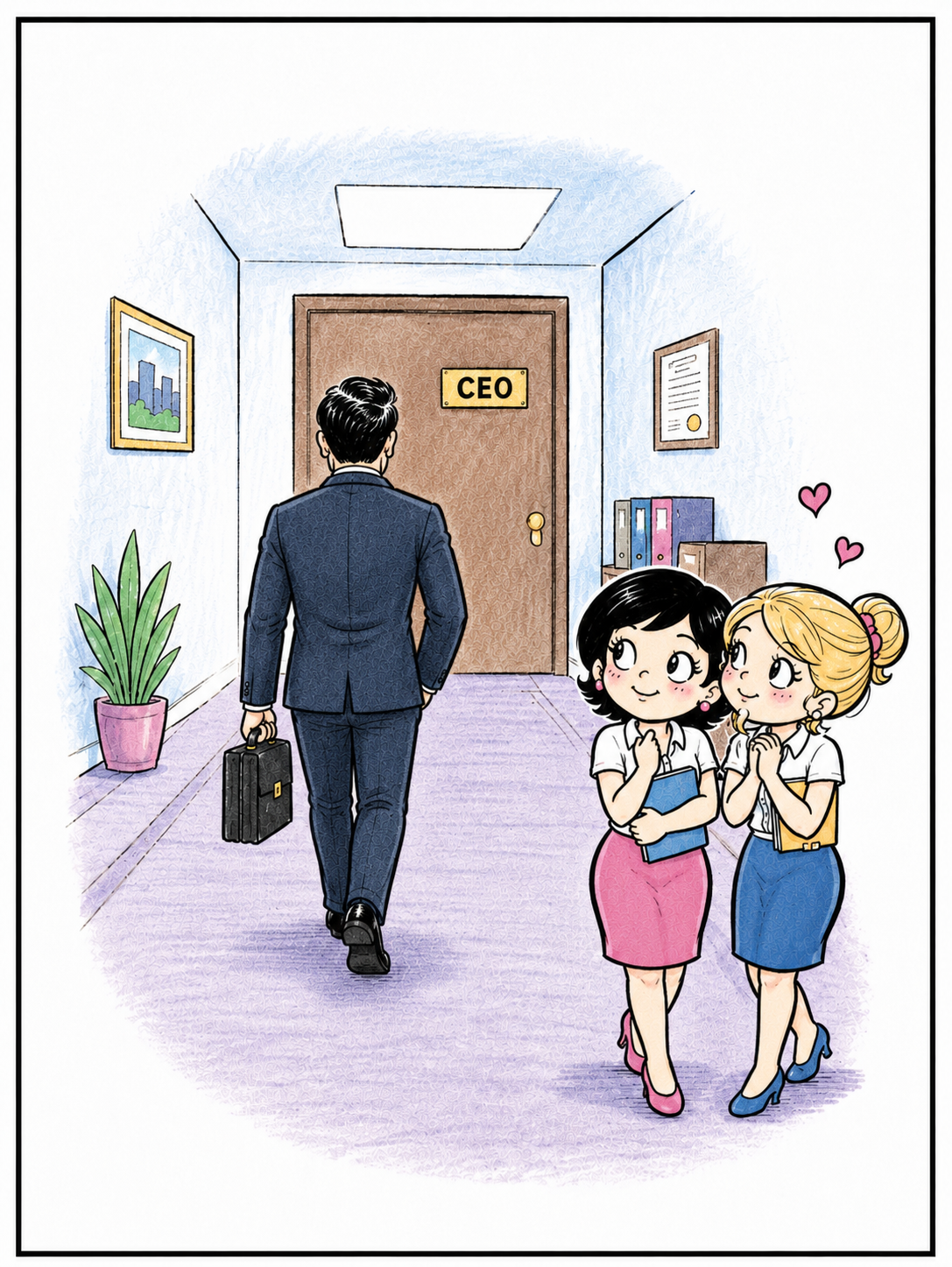
The CEO of a large company.
A man who knew how to make decisions, carry responsibility, and achieve results.
And in many areas of life, that worked.
But there was one area where for years he no longer felt control — only a growing loss of confidence in himself.
Excess weight had followed him almost his entire life.
And over time, it became something far greater than appearance alone.
Gradually, there appeared:
shame,
self-doubt,
and the painful feeling
that somewhere inside him there was something he could not fully control — despite his intelligence, strength of character, and success in life.
What made it especially painful was the effect it had on his personal life.
On the outside, he appeared confident and accomplished. But inside, there remained a constant feeling that in this one part of life, he somehow kept losing control over himself.
At times, it felt to him as though he were living as two different versions of the same person.
In one — a composed, rational, strong man trusted by others.
In the other — constant exhaustion, internal tension, and the feeling that by evening, he would once again find himself trapped inside the same familiar scenario.
When Food Gradually Becomes Relief
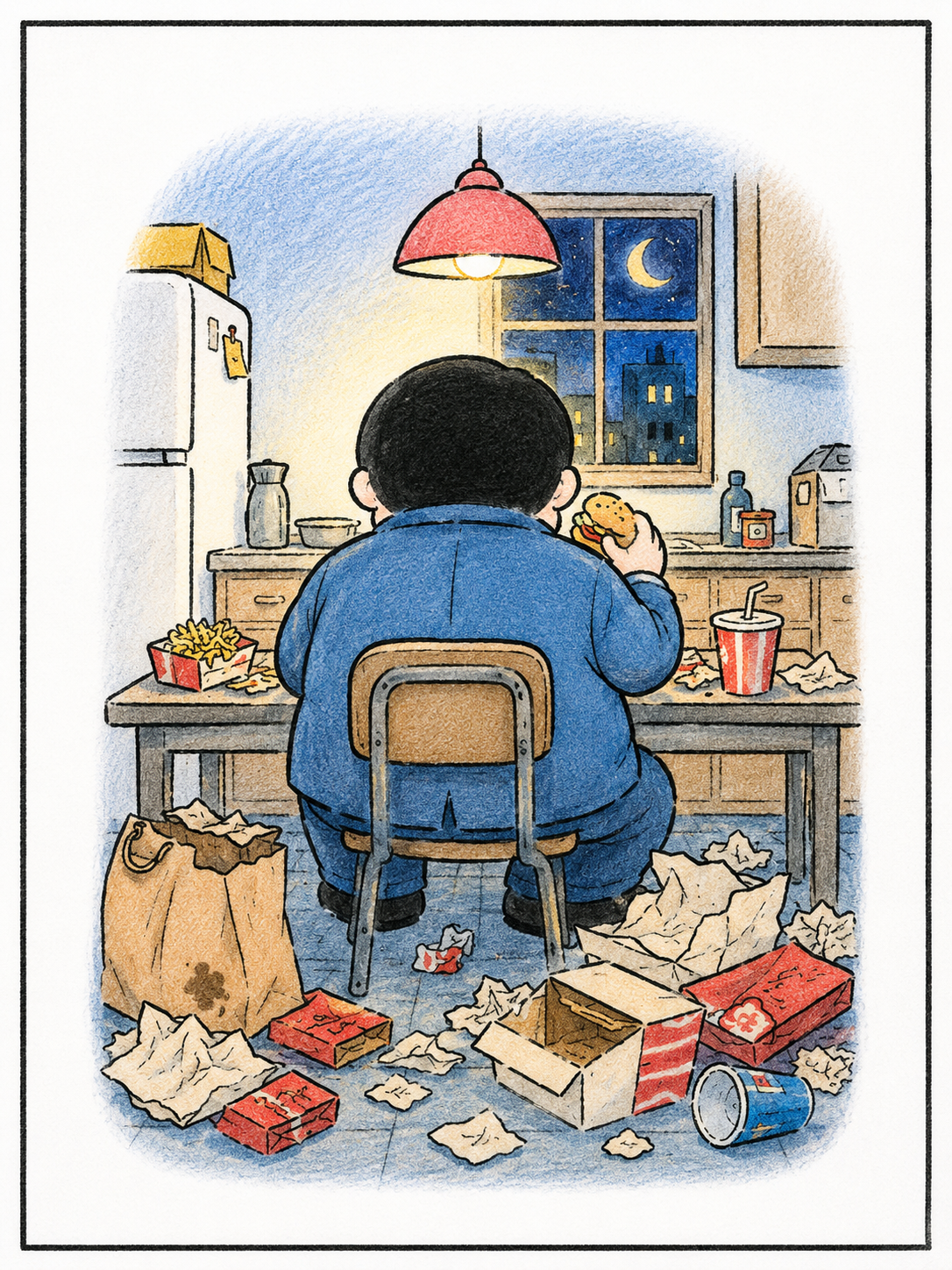
At one period in his life, he developed a strong attraction to alcohol.
Over time, he was able to stop drinking, because he understood: alcohol can become addictive and destroy a person's life.
But food felt different. Food seemed normal. Natural. Safe. Simply part of life.
And that is exactly why, for a long time, he did not notice that food had gradually begun to play a very different role.
Especially in the evenings, after long, stressful workdays.
By the end of the day, he often felt not simply tired, but internally depleted.
Sometimes, more than anything, he wanted, even for a short while, to quiet the constant pressure inside.
And little by little, food became exactly that.
A way to reduce internal tension and briefly feel better again.
Sometimes, he ate so automatically that later he could barely remember what he had eaten.
As though it was not even the taste itself that mattered most, but the process.
As though, for a short time, everything inside became quieter.
But afterward, the same things returned:
heaviness,
fatigue,
irritation,
and the familiar feeling of disappointment in himself.
When the Body Begins to Break Down
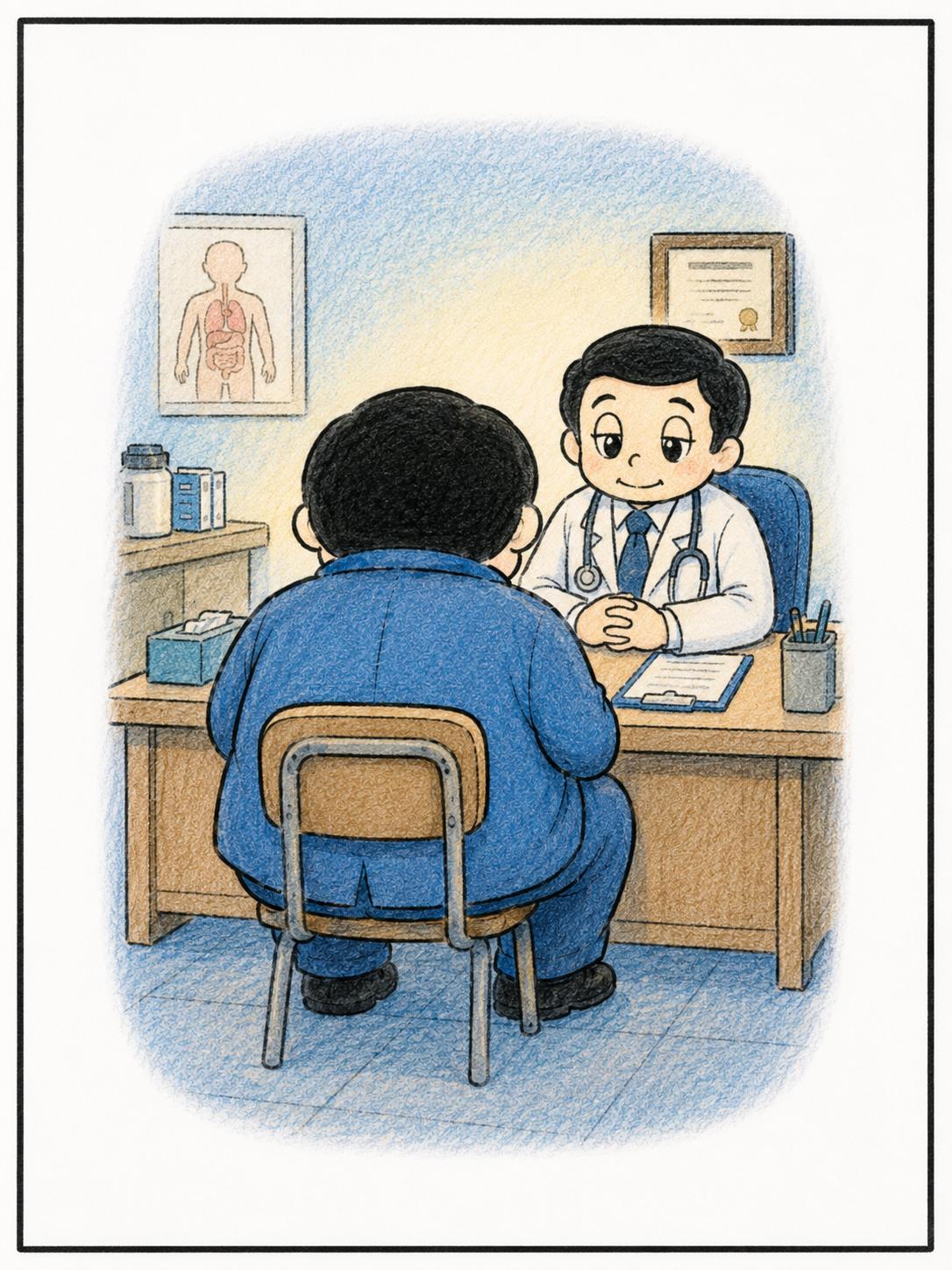
By the time he entered the program, the situation had already become serious.
Severe type 2 diabetes.
High blood pressure.
Significant excess weight.
Serious liver changes.
Fibrotic processes.
Constant fatigue.
High levels of inflammation.
He was taking a large number of medications.
Even ordinary things began requiring more and more energy.
He woke up already exhausted. Sometimes, it became difficult even to look at himself in the mirror.
Doctors were already warning him about major health risks.
And for the first time, fear for his health made him truly feel that continuing to live the way he had been living was no longer possible.
But alongside the fear, there was another feeling. He had almost stopped believing that anything could really change.
Because before that, there had already been years of:
diets,
restrictions,
attempts to start over,
disappointment,
and the return of the weight again.
Every new attempt brought hope at first. And then — slowly turned back into the same familiar feeling of defeat.
He was certain that ahead of him there would once again be:
The First Week Changed Everything
Most people who come into the program initially think primarily about weight.
And that is why the first thing that becomes important for them is to feel that change is actually possible.
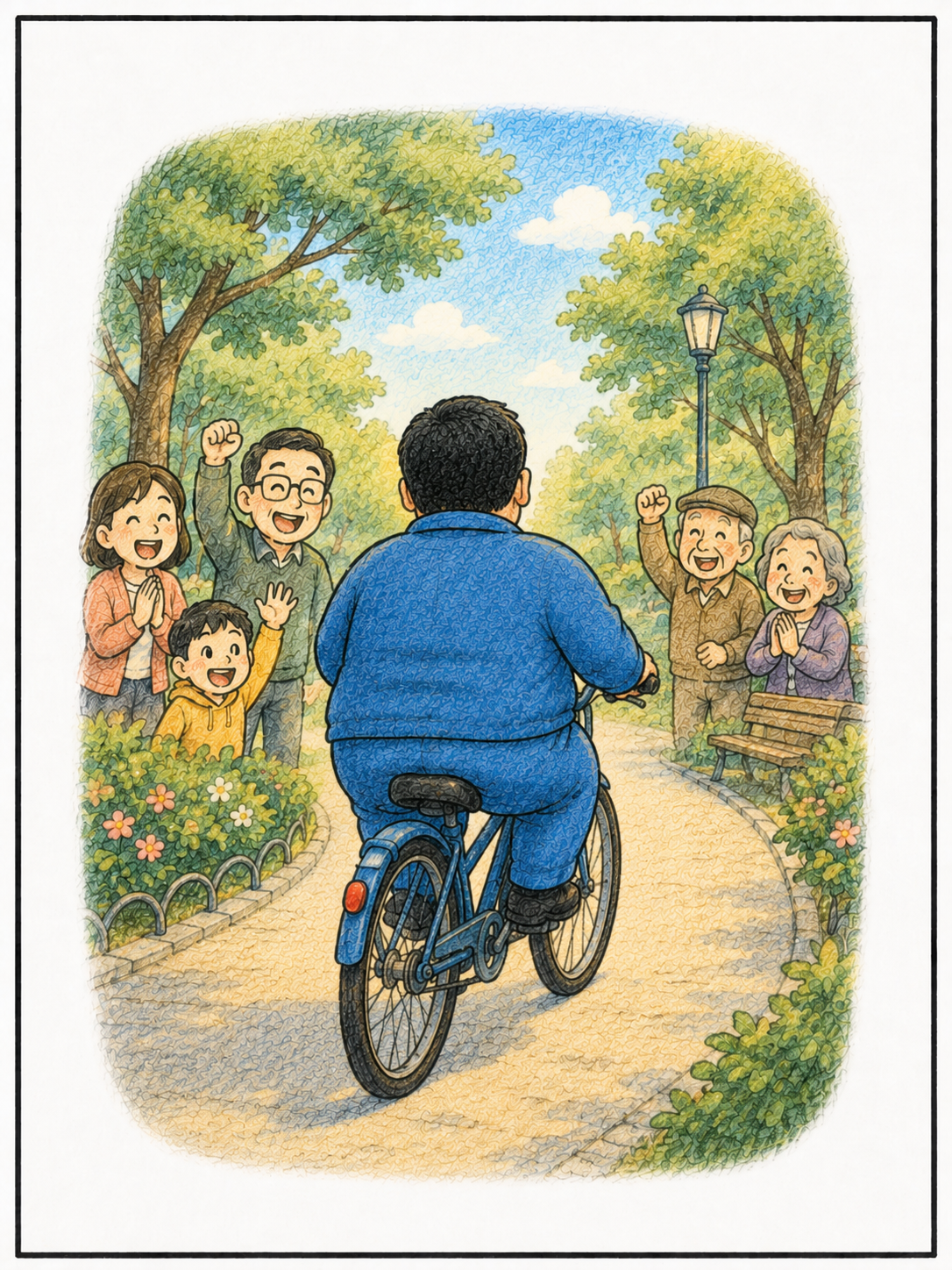
During the very first week, changes began happening that he did not expect.
The constant hunger gradually became weaker. Cravings began to ease. The weight started coming down. The swelling decreased.
He began waking up in the morning in a different state. There was more energy. More calm. More clarity.
And for the first time in many years, a new feeling appeared:
"Maybe this time, something is truly happening."
And this mattered not only physically.
When a person has spent years living in a state of:
constant cravings,
metabolic noise,
fatigue,
internal tension,
and endless struggle with himself,
he often loses the ability to truly hear: explanations, psychology, or motivation.
First, a person needs to experience relief directly. To feel that his internal state is genuinely beginning to change.
And only after that, little by little, do other things begin to appear:
trust,
the ability to listen,
to reflect,
and to move deeper into the process.
When a Person Begins to Understand That Change Is Possible
Gradually, he began to understand that the problem had never been only about food. And not only about discipline.
Between an impulse and an automatic reaction, there is a space where a person is still capable of choosing.
But in order to feel that space, a person first needs to step out of the state of constant internal pressure.
Step by step, he began:
understanding himself better,
noticing his reactions,
recognizing the moments when he had previously acted automatically,
and gradually recovering control.
Without constant war with himself.
Without the feeling that life itself had become an endless struggle.
What Truly Changed
Over time, it was not only his body that began to change. The very experience of life gradually began to change as well.
There was more confidence. More internal stability. More calm. More freedom.
Food stopped occupying that enormous space which had once, almost invisibly, been controlling:
His health improved. The weight gradually returned to a normal range.
But the most important change was something else.
For the first time in many years, he began to feel that he was once again the owner of his own life.
Not because he had learned to live in constant tension. But because, little by little, he no longer felt like a hostage to food, fear, and internal struggle.
And together with that, a feeling returned that he had almost forgotten.
Freedom.
What These Stories Have in Common
These stories are different. Different people. Different lives. Different professions. Different experiences.
And different reasons why people eventually come to Dr. Aidlin.
But if you look deeper, there is something they often share.
For years, each person tried to explain the problem in familiar ways.
Another diet. Another attempt to start over. Another wave of hope that slowly disappeared again.
And in every one of these stories, the problem was real.
The excess weight was real.
The diabetes was real.
The high blood pressure was real.
The constant fatigue was real.
The fear for their health was real.
But over time, it gradually became clear that the problem was not only physical.
Constant internal tension.
Automatic reactions.
Cravings.
Emotional pressure.
Exhaustion from endless struggle with themselves.
And the feeling that inside, the same scenario kept repeating itself again and again.
Many people come after years of attempts. After diets. After medications. After periods of hope. After the return of the weight.
Sometimes — after bariatric surgery.
Sometimes — after endless advice they already know by heart.
Eat less.
Move more.
Pull yourself together.
Try again.
But most often, people do not come because they lack information. They come because, at some point, information alone was no longer enough to help them feel free.
Real change often begins with something much simpler.
With the first feeling of relief. When things become a little quieter inside. When the constant hunger begins to weaken. When the internal pressure starts to ease. When more clarity appears. More calm.
And the first feeling that the body is finally beginning to respond.
That perhaps, life does not have to remain this way forever.
And only after that, little by little, something deeper begins to become possible.
A person starts listening differently. Noticing differently. Understanding himself differently.
And gradually begins to see that the problem was never only about food, only about weight, or only about willpower.
It was about a mechanism inside which a person had been living for many years.
The goal is not to teach a person to spend the rest of life in constant struggle with himself.
The goal is to help a person gradually return to a state where food no longer controls:
Not every story looks the same.
But real recovery often carries a very similar internal feeling.
And sometimes, after many years during which a person believed nothing could truly change anymore, a feeling begins to return that he had almost forgotten.
That life can become lighter again.
That health can gradually recover.
That trust in yourself can be restored.
And that freedom is still possible.
The Doctor Who Lived Inside Her Own Explanation

When she first came to Dr. Aidlin, she was 44 years old.
She was an anesthesiologist. Highly intelligent. Highly educated. Rational.
A person accustomed to relying on:
And yet, for almost her entire life, she had struggled with excess weight.
Over time, type 2 diabetes and high blood pressure were added to the picture.
As a physician, she understood very well that these were not separate, random problems.
They were part of a deeper process:
obesity,
metabolic syndrome,
disrupted regulation,
and the gradual deterioration of health.
She understood this professionally. But understanding something is not the same as being free from it.
Because alongside the excess weight, another feeling had lived inside her for years:
Something that had gradually become part of her internal story about herself.
Since childhood, she had believed that her obesity was her parents' fault. Especially her father's.
Her father had been a well-known surgeon. And years earlier, when she was a child, he had made the decision to remove her tonsils.
From that moment on, she gradually formed the belief that this decision had changed the entire course of her life.
That this was when the obesity began.
And together with it:
insecurity,
shame,
a painful feeling of unattractiveness,
and deep difficulties in her personal life.
It was difficult for her among other girls. Then among young women. Then among women.
She felt as though the excess weight separated her from the life other people seemed to live.
And although outwardly she became successful as a doctor, inside, there remained a constant feeling that some important part of life had never fully come together.
Medical Knowledge Did Not Make Her Free

As a physician, she understood many things.
She understood the connection between obesity, metabolic syndrome, type 2 diabetes, and high blood pressure.
She understood how all of it looked from a medical perspective.
But the real problem was something else.
She had never truly looked at excess weight as the external manifestation of a deeper internal mechanism.
To her, it had always been: either a consequence, or an injustice, or something that had been done to her from the outside.
And when she first encountered the idea that obesity could be an external manifestation of food addiction, it became a profound internal shock.
Not because she lacked medical knowledge. But because, for the first time, she began looking at her own life from an entirely different angle.
Gradually, she began noticing that food had long ago stopped being just food.
Inside it, there had been:
And together with that, the entire system of explanations inside which she had lived for so many years began to slowly loosen.
The Explanation She Had Lived Inside
One day during a conversation, Dr. Aidlin asked her:
"You are a physician yourself. What connection do you personally see between tonsil removal and obesity?"
The question seemed simple. But inside her, it collided with something far greater than logic alone.
Because this belief had not only been an explanation. It had become part of her internal foundation.
If her parents were to blame, then there was a reason that explained all the pain she had lived through.
But if that were not true — then she would have to look at the entire story of her life in a completely different way.
For many years, the resentment had gradually become almost a separate internal world.
Even though her parents had long since passed away, the old dialogue inside her had continued.
And only gradually did she begin to understand how heavy life can become inside unresolved resentment.
The Beginning of Real Change
But the real changes did not begin with psychology.
As with many people who enter the program, everything began with the first experience of relief.
When she saw that the problem could actually begin to change, something appeared that she had not felt in a very long time.
Hope.
The weight began to decrease. Little by little, her physical state improved. Her body began to feel lighter.
Her blood pressure decreased. The markers related to type 2 diabetes began to improve.
For the first time, she felt that her body was not simply "losing weight," but gradually emerging from a state of internal dysfunction.
And this happened quickly enough for her to not only understand — but truly feel — that change was possible.
There was more energy. More confidence. More trust in the process.
She began to see that her body was capable of changing.
And together with that, the internal image she carried of herself also began to slowly change.
And only after that did she become truly open to deeper internal work. Not to war with herself. But to understanding.
Freedom From the Internal Prison of Resentment
Gradually, she began to realize that for many years she had been living inside resentment that had quietly become part of her identity.
That resentment did not restore the past. Did not change her life. Did not protect her.
It only kept her trapped inside old pain.
And over time, something happened that became one of the most important internal transformations of her life.
Little by little, she freed herself from that internal prison.
And together with herself — she also freed her parents, whom for many years she had continued holding on the other side of those internal bars.
Because resentment is also a form of imprisonment. And in the end, it does not matter which side of the bars a person stands on. Inside resentment, no one is truly free.
What Changed Most
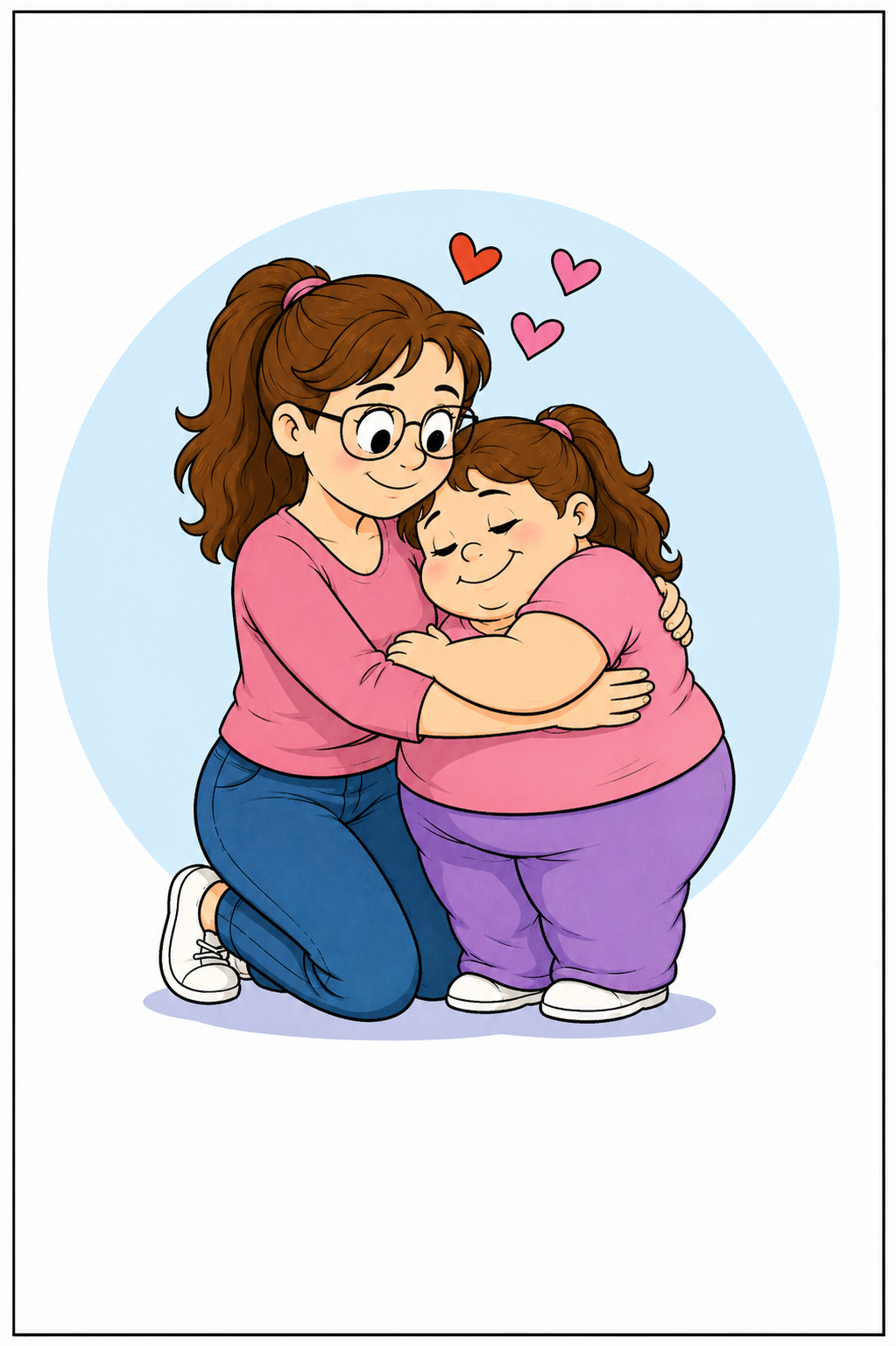
Over time, it was not only her body that changed.
There was more calm. More internal stability. More confidence in herself.
Little by little, the constant feeling that her life had been ruined by someone else began to disappear.
And together with that, another feeling appeared.
Freedom.
Not a perfect life. Not the absence of difficulties.
But the quiet feeling that she was no longer living inside old pain, old explanations, and constant internal struggle.
And that became one of the most important transformations of her life.
The Chef Who Was Certain It Was Impossible

One of Dr. Aidlin's clients was a chef. Very talented. Very successful. He owned his own restaurant group.
And at the same time — he struggled with severe excess weight.
When he first came to the consultation, there was not only despair in his voice, but genuine confusion.
He said:
"Doctor, you don't understand. I barely eat anything at all. I'm on my feet from four in the morning. I spend the entire day working around food. I'm constantly in the restaurant. But I practically don't eat. I honestly don't understand why I'm so overweight."
To him, it truly felt almost unfair.
And then he added:
"But I have to taste everything. It's my job."
During one of their conversations, Dr. Aidlin gave him another example.
He said:
"Imagine a person who works in a bank. He spends the entire day surrounded by money. Holding it. Counting it. But at the same time, he clearly understands the difference between the bank's money and his own money. And because of that, there is no automatic impulse to take it for himself."
Then Dr. Aidlin calmly said:
"Food in the restaurant is part of your work. But that does not mean it must automatically become part of you."
The chef was silent for a long moment. And then said:
"But I still have to taste the dishes."
"All right," Dr. Aidlin replied.
"Then let's try a small experiment. Take someone from your team. And let that person stay beside you throughout the day holding an ordinary bucket. Every time you taste something, do not swallow it. Simply spit it out into the bucket."
A week later, he returned in a state of almost complete astonishment.
And said:
"Doctor… the bucket wasn't enough."
And that was the moment he truly saw, for the first time, how much had been happening automatically.
Not because of hunger. Not because his body actually needed food.
But because certain actions had been repeating for years almost without awareness.
Over time, he went through the same transformation many other people experience in the program.
Not through constant war with himself. But through the gradual appearance of awareness, internal freedom, and the ability to choose.
And little by little, food stopped being something that automatically controlled him — even though he continued working with it every single day.
Returning to Yourself
All of these stories are different. Different people. Different lives. Different professions. Different reasons why a person eventually reaches out for help.
But if you look deeper, there is something they often share.
It is not only about excess weight. Not only diabetes. Not only blood pressure. Not only fatigue or fear for health.
It is also about years of attempts. Years of hope that appears — and then slowly disappears again.
Diets. Restrictions. Medications. Advice a person already knows by heart.
Sometimes — bariatric surgery.
Sometimes — new methods that initially bring hope, but do not always restore a person's inner freedom.
Because very often, the problem turns out to be deeper than weight alone. Deeper than discipline. Deeper than willpower. Deeper than simply knowing what a person is "supposed to do."
It is about a state in which a person has spent years living inside the same cycle:
craving,
tension,
automatic reaction,
brief relief,
and then once again — fatigue, disappointment, and loss of trust in oneself.
Real change often does not begin with a dramatic decision.
And not with a promise that "from this day forward, everything will be different."
It begins more quietly. With the first feeling of relief.
When things become a little calmer inside. When the constant hunger begins to weaken. When cravings start to ease. When more clarity appears.
When the body, for the first time in many years, begins to respond differently.
And only after that, little by little, a person begins to hear himself differently. To notice differently. To understand differently.
Not to spend life fighting himself forever, but gradually stepping out of the state of constant internal war.
And then, the result becomes not only a change in the body. It becomes a return.
To health.
To calm.
To clarity.
To trust in yourself.
To the feeling that life can become lighter again.
And that freedom is still possible.
Sometimes Understanding Itself Becomes the Beginning
Not every person who reads these stories is ready to begin immediately.
But at some point, a person starts to realize: life does not have to remain the same forever.
Change is real. Recovery is real.
Calm, clarity, energy, and control over your internal state are not abstract motivation or beautiful ideas.
For many people, they gradually become real life. Step by step.
When a person truly begins to understand what has been happening to him, and stops spending his entire life fighting only the consequences.
If somewhere in these stories you recognized something familiar in yourself, then perhaps the next step may be very simple: to understand where your own recovery might begin.
Because sometimes, the most important discovery is simply realizing that real change is actually possible.