THE PROGRAM
You've already begun asking a different question.
Not simply: "What should I do?" And not only: "Why does this keep happening again?" But something deeper: How does this actually work?
Because until now, you may have only been dealing with what appears on the surface. Weight. Food. Attempts to control yourself. New decisions that bring hope at first and then, little by little, lead back to the same disappointment.
But when the same result keeps returning again and again, it usually means you are dealing with something deeper than it first appears. And this is often the moment when a person pauses and begins asking a different kind of question.

What is food?
If you ask that question, most people will answer in almost the same way:
And technically, all of that is true. But it is only part of the truth. Because a human being is not a machine that simply runs on fuel. And food has never been just fuel.
For human beings, food has always been something more. It has been connected to survival. To searching. To effort. To reward. To pleasure. This process developed over millions of years. In a world where food was not constantly available. Where it had to be found. Where hunger was natural. Where pleasure from food was part of survival itself. But the world changed...
Today, food is always available. Without searching. Without effort. Without waiting. And often, without real hunger. And this is where the central conflict begins. A person lives in a modern world of food abundance, while inside, the same ancient survival system still operates — a system designed for a world of scarcity.
FOOD AS STATE REGULATION
The issue is not simply food.
The issue is what food gradually begins to become. Food stops being only nourishment. It becomes a way to change your state.
When you feel:
bored·anxious·lonely·exhausted
emotionally empty
When you want, even for a moment, to feel something pleasant.
And you may find yourself eating not because you are physically hungry, but because you want to change how you feel.
relief·pleasure·comfort
fill an internal pause·reduce tension
reward yourself·calm yourself
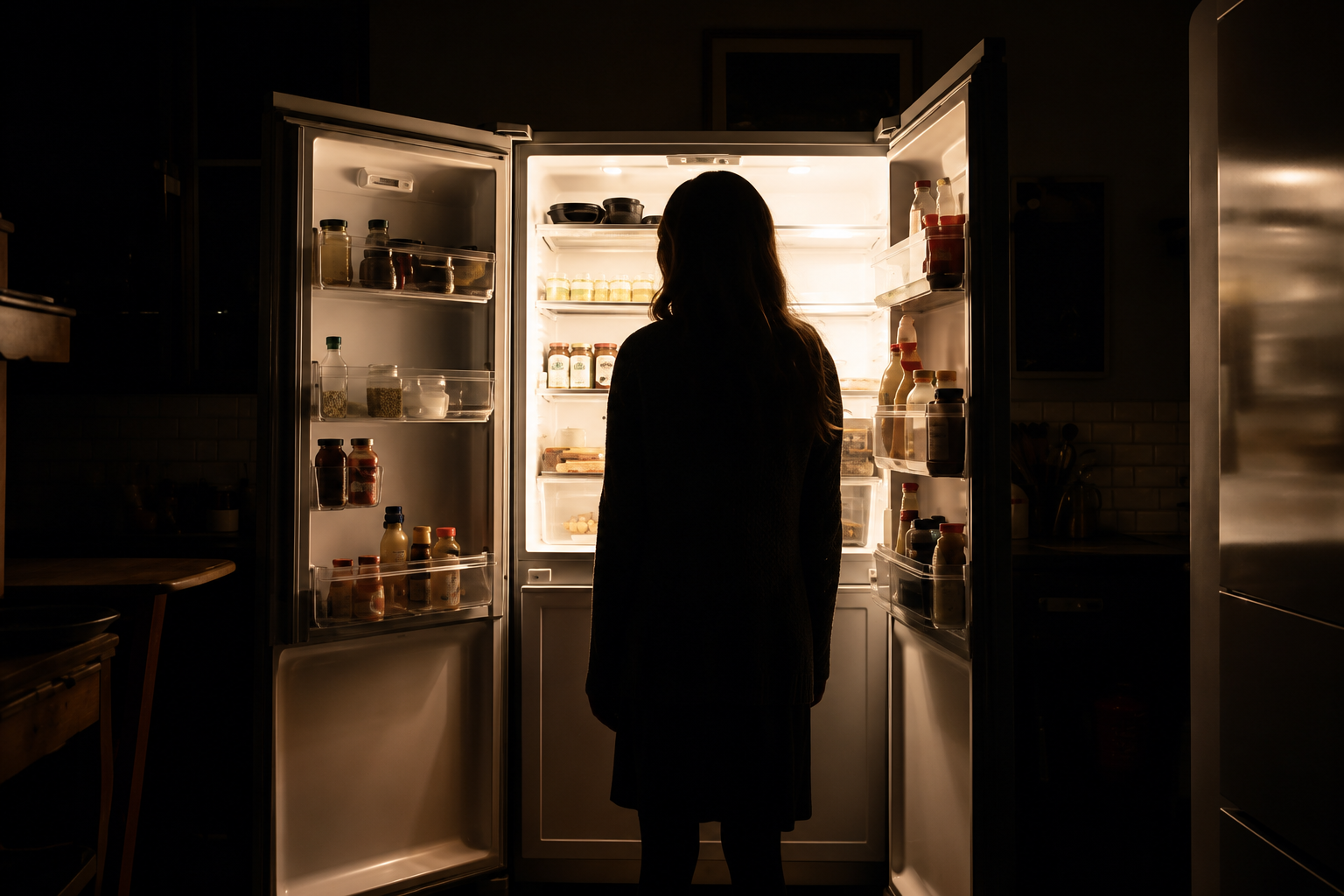
Sometimes, you do not even notice how it begins. You suddenly find yourself:
01
Standing in front of the refrigerator.
02
Opening a package.
03
Taking another bite.
The inner question
And afterward, you catch yourself asking:
“Why did I do that?”
This is often the moment when people begin to recognize something deeper inside themselves.
Because this is no longer just nutrition. It becomes a relationship with food that gradually turns into part of internal regulation.
THE INVISIBLE LOOP
Food gradually begins to take on a role it was never meant to have.
It becomes not only something that supports the body, but something that helps change your mood, silence internal tension, create a sense of reward, or at least, for a short time, create the illusion of relief.
And this is where the trap becomes difficult to notice.
You can stop
Drinking alcohol
You can stop
Smoking
You can stop
Using drugs
But you cannot stop
Eating
Food is
It does not look like addiction. It looks like life.
And that is why a problematic relationship with food can remain invisible for years. Like ordinary eating habits.
Like
“I just enjoy good food.”
Like
“I need something to help me relax.”
Like
“It's been a difficult day.”
Like
“I'll start again tomorrow.”
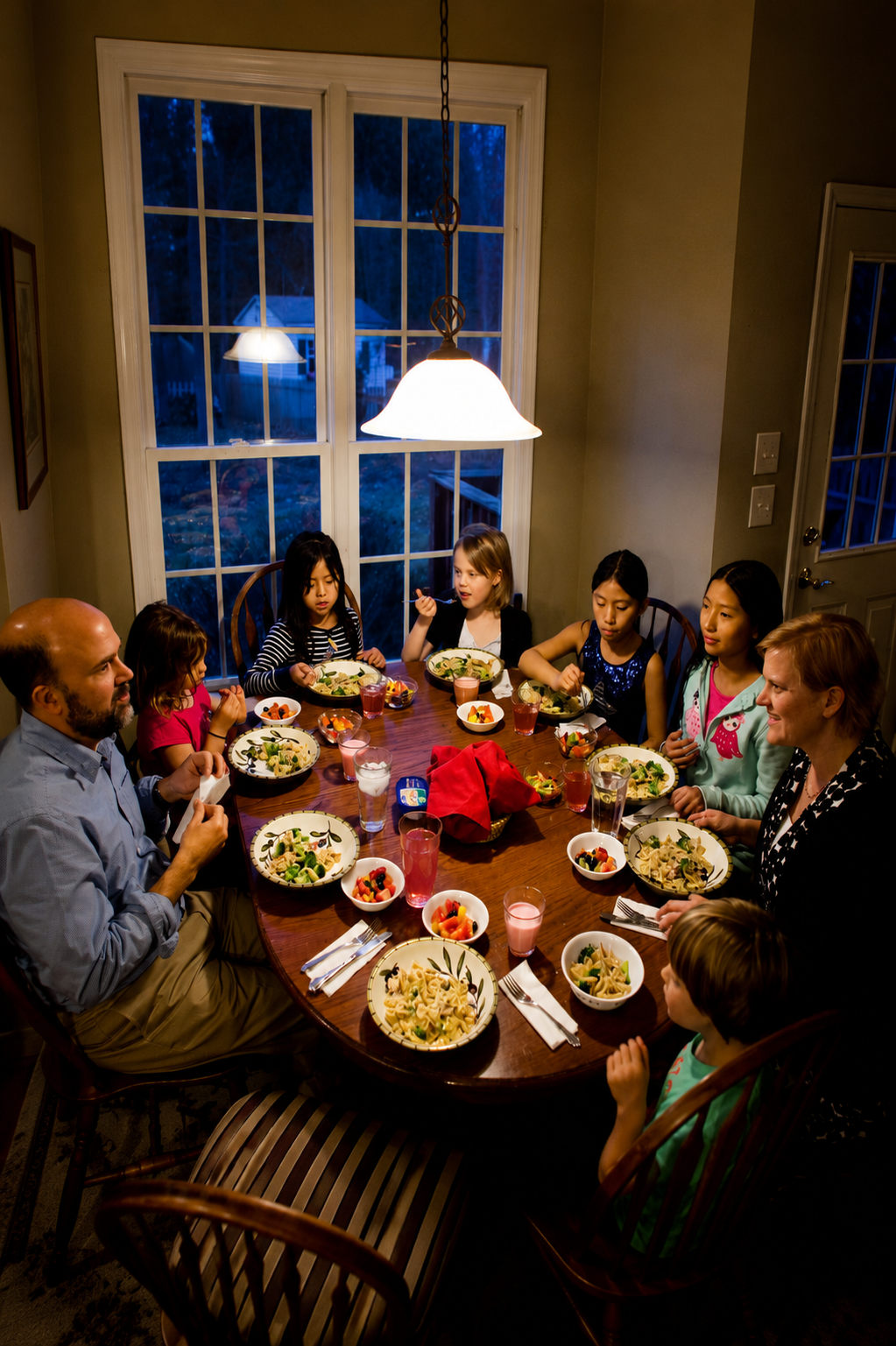
But underneath all of that, something else gradually begins to form. Not simply a habit, but a cycle involving:
The cycle
- 01 emotional states
- 02 stress
- 03 physiology
- 04 hormonal responses
- 05 pleasure
- 06 impulses
- 07 automatic reactions
And when that cycle remains misunderstood, it gradually begins to reproduce itself.
SYMPTOMS VS CAUSE
This is why weight loss alone does not solve the problem.
Weight
is a manifestation.
Obesity
is a manifestation.
Metabolic dysfunction
is also a manifestation.
Problems involving
blood sugar·insulin·energy·fatty liver
blood pressure·inflammation·and overall health
may all be different expressions of a deeper internal process.
And when the focus remains only on symptoms, the symptoms may temporarily improve.
But if the underlying cause remains unchanged, everything gradually begins to return again.
How it returns
Sometimes in the same form.
Sometimes in a different one.
Sometimes through weight.
Sometimes through health.
Sometimes through exhaustion, anxiety, loss of control, and deep internal disappointment.
A DIFFERENT APPROACH
That is why Dr. Aidlin's program is not simply a weight-loss program.
Weight loss may become an important result. But it is not the primary goal.
The primary goal is health recovery.
- 01
Recovery of metabolic health.
- 02
Recovery of control.
- 03
Recovery of clarity.
- 04
Recovery of quality of life.

Work not only with what you eat
But also with: why you eat, how you eat, when you eat, what you are searching for in food, what food emotionally represents for you, the role it gradually begins to play in your life.
Because the real problem is not the plate. And not the number on the scale. The real problem is the internal process that gradually begins influencing your relationship with food, your relationship with yourself, your emotional state, and eventually, your quality of life.
RECOVERY
And that is why a different approach becomes necessary. Not another diet. Not another temporary restriction. Not another attempt to 'pull yourself together.' But a structured process of recovery.
First
relief from constant physical and psychophysiological pressure.
Then
relief from automatic reactions.
Then
re-examining old beliefs.
Then
gradually changing the way you think about food, about yourself, and about life itself.
Because if you remain the same, you will eventually return to the same patterns.
- 03
And when behavior changes, health can gradually begin to recover as well.
- 02
And when your internal state changes, behavior gradually begins to change.
- 01
But when understanding changes, your internal state begins to change.